What Do Garden Snakes Eat
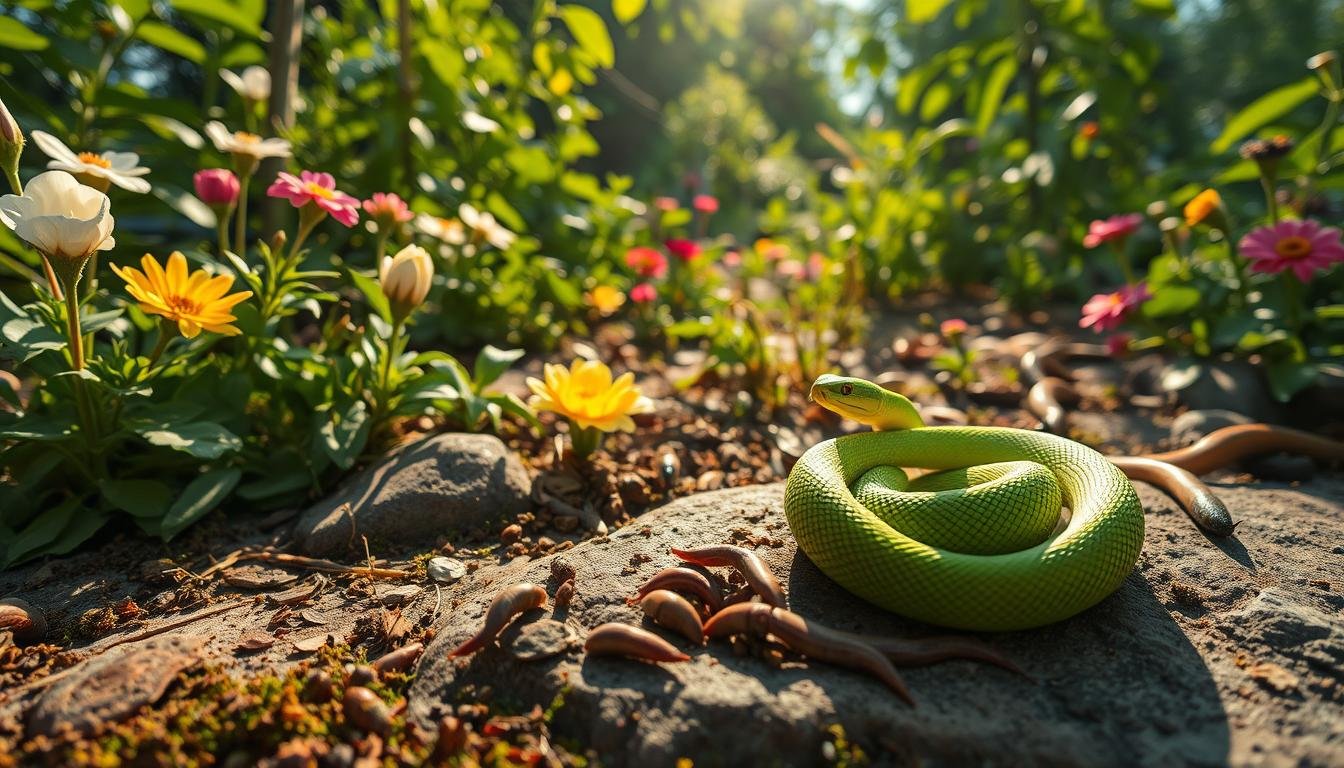
We open with a clear, US-focused view of what a typical garden visitor eats and why that matters to our yard. In North America, the term often points to garter snakes, the common residents around homes and plants.
Garter snakes are carnivores that swallow prey whole. Their diet shifts with habitat and season, so a snake near water will take different prey than one on dry ground.
We note when sightings peak: warm parts of the day when hunting is active. In winter months feeding slows or stops as many garter snakes hibernate, sometimes together.
This article will explain identification, diet zones—dry versus near-water prey—and safe ways to share our outdoor spaces with these helpful pest controllers.
Meet the “Garden Snake” We See in Our Yards: The Garter Snake
When we spot a slim, striped snake near our lawn, we are usually seeing a garter in its preferred habitat.
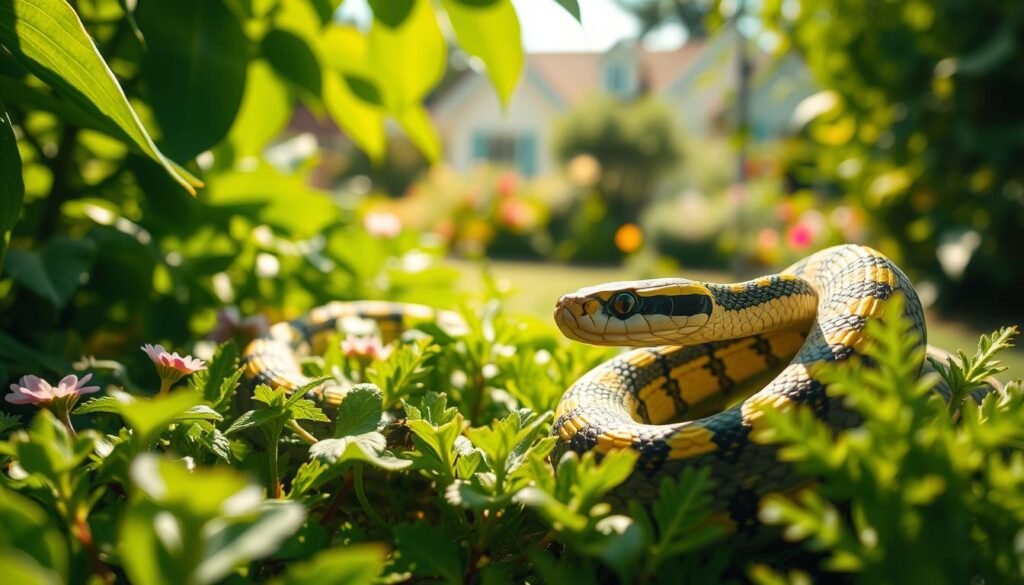
In much of North America the informal label points to the garter group (Thamnophis). A concrete example is the common garter, and the common garter snake is even Massachusetts’ state reptile.
Recognition: color, stripes, and length
Garters often show plain or checkered green, brown, or olive tones with a thin yellowish stripe down the back. Patterns can vary, but the stripe is a reliable field mark.
Typical length runs about 20–30 inches, so many adults measure roughly 2–3 feet. We recommend identifying from a distance to avoid stressing the animal or getting near its tail.
Where we find them in our yards and nearby areas
These snakes occupy meadows, lawns, forest edges, and spots near water. They favor edges of landscaping, pond margins, and wet ditches where prey is abundant.
Common hiding sites include under rocks, steps, stone walls, foundations, hollow logs, and crevices—places we might disturb during yard work.
| Trait | Common garter | Typical size |
|---|---|---|
| Color & pattern | Green/brown with yellow stripe or checkered pattern | 20–30 inches |
| Habitat | Meadows, lawns, forest edges, near water | Often found within yards and nearby areas |
| Hiding spots | Under rocks, logs, foundations, stone walls | Short-term retreats for denning or shelter |
What Do Garden Snakes Eat in Different Habitats?
Across the United States, food options depend on whether a snake hunts on dry ground or in shallow water.
They’re carnivores that swallow prey whole
Garter snakes are true carnivores. They do not chew; they seize and swallow prey whole. That limits meals to what a snake can overpower and fit.
Warm-day hunters: when garter snakes are most active
We often spot garter snakes basking, then moving during the warmest part of the day. They locate prey by tongue-flicking and the Jacobson’s organ, sensing chemical traces in grass, mulch, and edges.
Dry ground versus near water
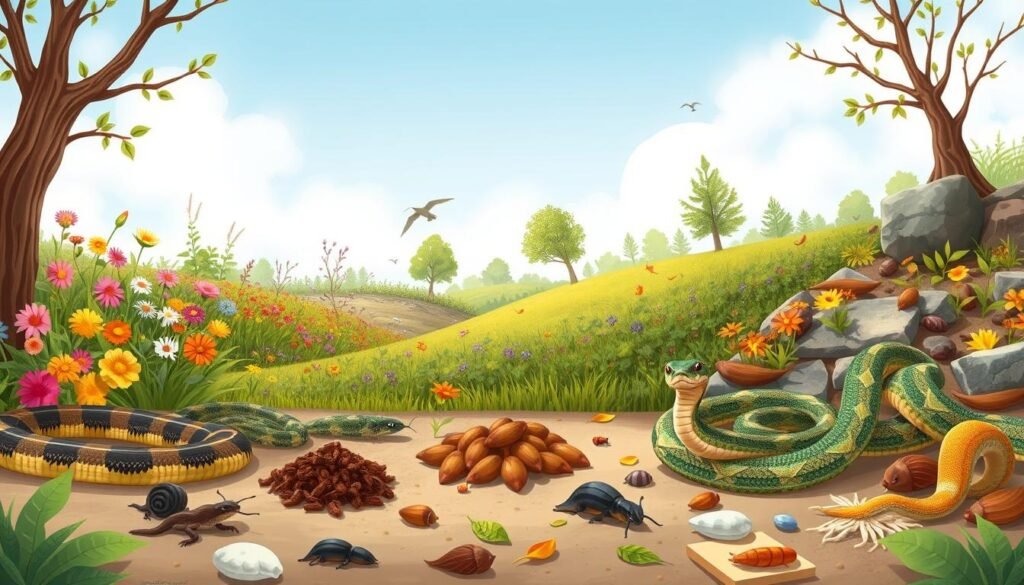
- Dry ground: earthworms, slugs, snails, insects, small lizards, and rodents such as mice; occasional small birds.
- Near water: leeches, small fish, tadpoles, frogs, toads, and salamanders; garter snakes swim well and exploit shoreline prey.
| Habitat | Common prey | Benefits to yard |
|---|---|---|
| Dry ground | Earthworms, slugs, insects, lizards, mice | Reduces slugs and rodents that damage plants |
| Near water | Fish, tadpoles, frogs, salamanders, leeches | Helps control aquatic and amphibian pests |
| Seasonal shifts | Feeding drops in winter months during communal hibernation | Fewer sightings Oct–Apr; little to no feeding then |
Why Garter Snakes Are a Quiet Asset in Our Garden
A short-term look misses the real benefit: over months and years, garter reduce populations of pests that harm our plants and bulbs. They hunt slugs, large insects, leeches, and small rodents that often damage beds and shed areas.
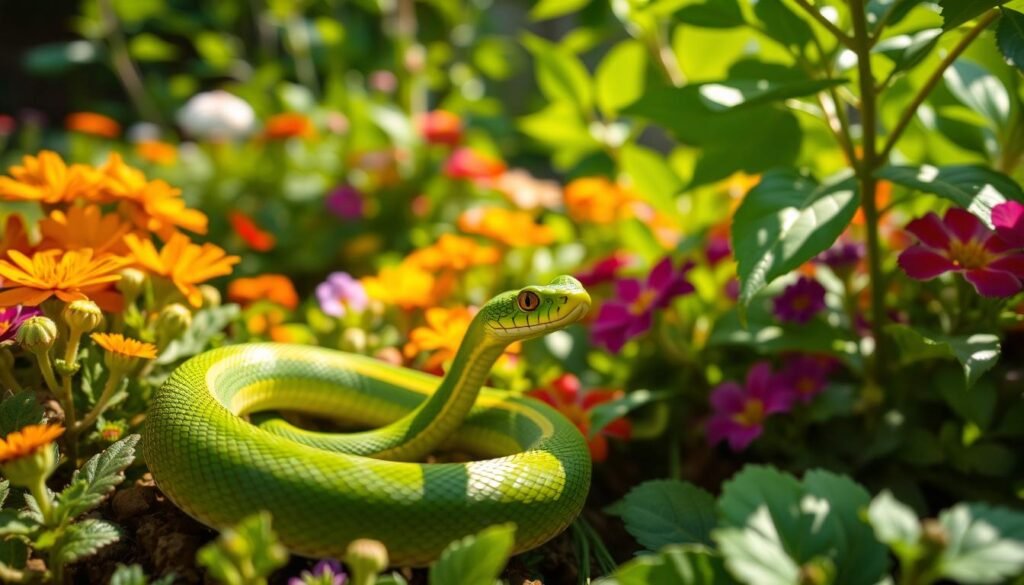
Natural pest control for slugs, pests, and rodents around home and plants
We treat garter as steady, low-maintenance allies. Their food choices overlap with the creatures that chew seedlings, eat leafy greens, or burrow near foundations.
Snakes are shy and avoid us. Defensive behaviors usually follow being grabbed or having a tail pulled. That reaction is escape-focused, not true aggression.
- Fewer slugs mean less chewing on young plants and ornamentals, especially in damp spots.
- Predation on mice and other rodents lowers damage along edges, in sheds, and near foundations.
- Over years, consistent pressure helps prevent pest population spikes in a single season.
| Role | Common prey | Benefit to home |
|---|---|---|
| Dry ground hunter | Slugs, insects, worms | Less plant and bulb damage |
| Edge and shore hunter | Leeches, small amphibians, rodents | Fewer pests near sheds and water |
| Long-term presence | Variety of small prey | Stable pest control over years |
We should view garter as part of a healthy ground-level habitat rather than a problem to solve. They won’t remove every pest, but combined with good sanitation and habitat management, they are a useful friend in our outdoor areas.
Living Alongside Garden Snakes Safely and Responsibly
We can share outdoor spaces with garter with a few simple habits that protect our family and wildlife. Give a snake wide berth, avoid sudden moves, and let it leave on its own.
Never try to capture or test a garter snake. Even small snakes may bite or release musk when stressed. Walk your mowing path first and pause before lifting rocks, logs, or pavers where a snake may shelter.
Make the yard snake-tolerant: leave a few rock piles or hollow logs for refuge, keep high-traffic kid and pet zones tidy, and manage pond edges so water and near water areas remain visible and safe.
Avoid pesticides and slug bait; toxins move up the food chain when a snake eats poisoned slugs or other prey. Protecting habitat and hibernation sites helps local populations over years and keeps pests and rodents lower around our home and plants.