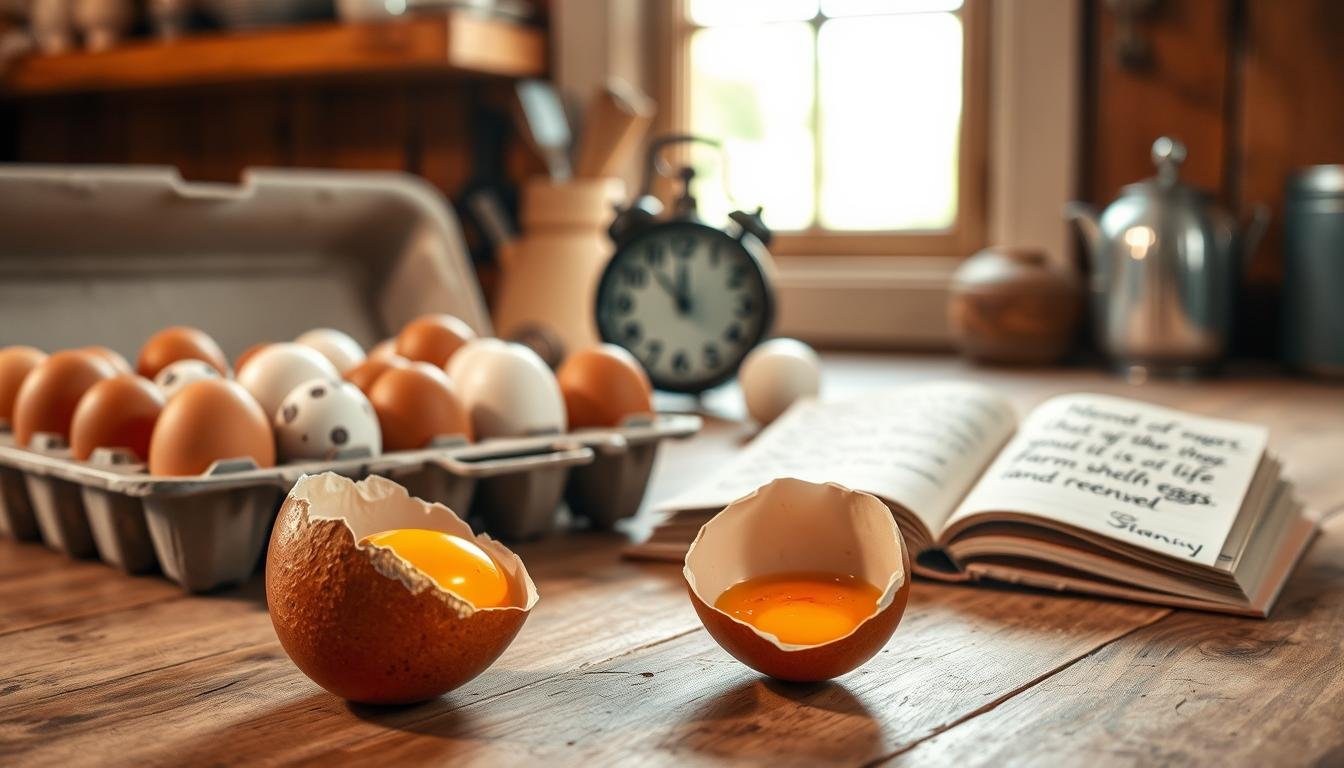
How Long Do Farm Fresh Eggs Last
We open with a practical answer so readers know what to expect. Unwashed farm fresh eggs can sit on the counter for several weeks thanks to their natural bloom. Stored in the refrigerator, they can keep for months when handled correctly.
We assume no printed date, so we rely on handling history and three quick checks: the float test, a simple smell test, and a visual inspection. These let us judge safety and quality before cooking.
Consistent conditions matter as much as age. Washed versus unwashed shells, steady cool temps, and prompt refrigeration change the shelf life and affect cooking results like runny yolks or easy-peel hard-boiled eggs.
For surplus supplies, we note two longer-term options: freezing mixed egg whites and yolks, or water glassing for up to 12–18 months. These methods help us preserve flavor and freshness without waste.
What makes farm fresh eggs different from store-bought eggs</h2>
We see clear differences in handling, labeling, and timing that change quality and cooking results. Local producers often collect and sell within a day or two. That short supply chain is why many farm fresh cartons lack a printed expiration date.
By contrast, store eggs usually carry a packing code. Supermarket cartons can show a Julian date tied to when eggs were washed and packed, not when the hen laid the egg. USDA guidance lets handlers collect and pack within about 30 days before retail, so groceries can be older than they seem.
What the packing and timeline mean for us
Distribution stretches time. Large-scale systems move dozens of hens’ product through grading and transport. That adds days or weeks before the carton hits shelves.
How freshness affects cooking
Very new eggs give firmer whites and rounder yolks, so we use the newest for fried or over-easy dishes. Slightly older eggs peel more easily when hard-boiled because the pH rises with age.
- Farm cartons often skip dates due to quick turnover and direct sales.
- Store eggs use codes tied to packing, so the egg may be older than the date implies.
- We rotate: newer eggs for appearance and texture, older ones for boiling and baking.
How Long Do Farm Fresh Eggs Last (quick shelf-life ranges)
We give a compact guide to typical storage windows so we can set expectations before testing individual specimens.
Unwashed eggs at room temperature
Unwashed eggs kept in a cool, shaded spot usually remain usable for about 2–3 weeks. A consistently cool counter extends usable time compared with a warm kitchen area.
Unwashed eggs in the refrigerator
When placed in the refrigerator soon after collection, unwashed eggs can keep quality for roughly 3–5 months under steady temps. Some sources note shorter safe intervals, so dating cartons helps us track real time.
Washed eggs in the refrigerator
Once shells are washed and chilled, we refrigerate immediately. Washed eggs generally remain usable for around two months, though flavor and texture often decline sooner than unwashed counterparts.
| Storage | Typical range | Notes |
|---|---|---|
| Room temperature (unwashed) | 2–3 weeks | Best in cool, shaded spots |
| Refrigerator (unwashed) | 3–5 months | Stable temp and dated cartons extend shelf life |
| Refrigerator (washed) | ~2 months | Safe but quicker flavor decline |

Room temperature vs refrigerator storage: choosing the right method</h2>
We decide between counter and fridge by focusing on how stable our storage environment really is. Temperature swings and humidity shifts matter more than convenience when we choose where to keep egg supplies.
How temperature swings speed up spoilage
Fluctuating temperature speeds bacterial growth and degrades quality. A steady cold under 7°C (45°F) slows breakdown and keeps yolks and whites firmer.
Where to store eggs for steadier temperature and humidity
Inside the refrigerator, avoid the door. The interior shelf or a rear corner gives the steadiest temperature and humidity for storing eggs.
When unrefrigerated storage is reasonable for backyard and backyard chicken eggs
Unrefrigerated storage works if eggs are unwashed, kept cool, and out of direct sunlight. Use them within a few weeks and track collections.
- Pick one method and stick with it to avoid repeated temperature shock.
- Avoid counter storage if eggs were washed, our kitchen is hot, or handling history is unknown.
- Keep a small bowl of water nearby for quick rinses only when necessary; dry and refrigerate after washing.
The bloom, the shell, and why unwashed eggs last longer</h2>
We explain why that thin, waxy layer on each shell matters more than many realize.
How the protective coating helps block bacteria and moisture loss
The bloom, or protective coating, seals tiny pores in the shell. This slows moisture loss and keeps bacteria out of the interior.
With that barrier intact, we see firmer whites and fresher yolks over time. The coating helps reduce the chance of contamination during short counter storage and extended refrigeration.
What happens when washing strips the coating
When we scrub or rinse at the wrong temperature, the bloom can wash away. Once removed, pores become exposed and air exchange increases.
Exposed shells let bacteria and odors in and speed drying. That makes the product more vulnerable and shortens quality life in the fridge.
- Define bloom: a natural, waxy seal on the shell that blocks pores.
- Benefit: slows moisture loss and reduces bacterial entry.
- Risk: excessive washing removes the coating and raises contamination risk.
- Practical note: clean gently; avoid aggressive scrubbing unless dirt requires it.
| Condition | Effect on shell | Recommended handling |
|---|---|---|
| Bloom intact (unwashed) | Pores sealed; slower moisture loss; lower contamination risk | Store cool; brief counter use OK; refrigerate for long storage |
| Washed shell | Bloom removed or reduced; higher air exchange and contamination risk | Refrigerate immediately; use sooner; avoid repeated temp changes |
| Lightly cleaned (dry brush) | Dirt removed; bloom largely preserved | Dry-clean when possible; refrigerate if not used within days |
Our next section explains the gentle cleaning steps we use so we keep that natural protection while making eggs safe to handle.
How we clean and handle farm fresh eggs without shortening freshness</h2>
Practical, low-impact cleaning lets us prepare eggs for the kitchen without shortening their usable time. We focus on preserving the coating while removing visible debris.
Dry cleaning first for lightly soiled shells
When an egg is mostly clean, we dry-brush or wipe with a soft cloth. This removes dirt while keeping more of the natural coating intact.
Rinsing dirty eggs with cool water and minimal rubbing
If an egg is noticeably soiled, we rinse under cool running water. We use gentle rubbing with our hands and avoid force that could push contaminants through pores.
Drying completely and refrigerating immediately after washing
After any rinse, we dry eggs fully with a clean towel. Washed eggs go into the refrigerator right away; stored this way, washed eggs keep for several weeks to a couple of months.
When not to over-wash and why it matters
We avoid repeated washing or harsh scrubbing. That way we limit removal of the protective coating and reduce the chance of bacteria reaching the interior.
- Start dry; rinse only when needed.
- Use cool water and minimal friction.
- Dry fully and chill immediately after cleaning.
| Step | Action | Benefit |
|---|---|---|
| Dry clean | Brush or wipe | Preserves coating |
| Rinse | Cool water, light rub | Removes soil without forcing contaminants |
| Dry & refrigerate | Towel dry, immediate chill | Limits bacteria growth; extends usable time |
How to tell if fresh eggs are still good before we eat them</h2>
Before we crack one open, a few fast checks let us judge safety and quality. These simple steps save time and stop a bad egg from ruining a recipe or causing illness.
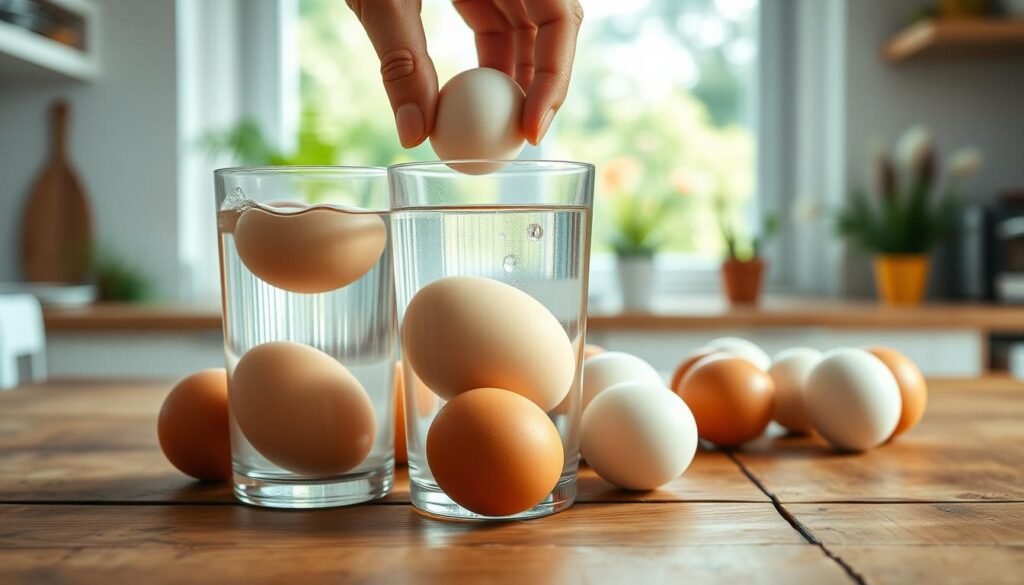
The float test in a bowl of cold water
We use a bowl of cold water for a quick float test. Place the egg gently in the water and watch what happens.
- If the egg sinks and lies flat, it is very fresh and fine to use.
- If it sinks but tilts or stands upright, it is older but often still usable for baking or hard-boiled dishes.
- If the egg floats, the air cell is large and we discard it; an egg floats when air and spoilage change density.
The smell test after cracking into a small bowl
When an egg seems questionable, we crack it into a small bowl first. A clear, neutral odor means it is fine.
If there is a sulfur or rotten smell, we discard the egg and clean the bowl. This prevents one bad egg from contaminating a batch.
Visual inspection: cracks, mold, watery whites, and flat yolks
We scan shells and contents for obvious problems.
- Discard shells with powdery mold, deep cracks, or a slimy film.
- Watch egg whites: watery, very runny whites signal age and reduced quality.
- Note yolks that spread flat quickly—those are best used where appearance matters less.
| Result | Meaning | Recommended action |
|---|---|---|
| Sinks and lies flat | Very fresh; air cell small | Use for frying, poaching, or raw preparations |
| Sinks but tilts upright | Older but often safe | Use for baking or hard-boiling |
| Floats | Large air cell; possible spoilage | Discard; do not attempt to mask odor by cooking |
We follow a simple kitchen rule: when in doubt, throw it out. Clear checks—float, smell, and sight—help us keep meals safe and tasty.
How to store eggs for maximum freshness in real life</h2>
Clear storage routines make it easy to keep a steady supply of usable fresh eggs and avoid waste. We set simple rules that fit daily life and busy kitchens.
Labeling with the collection date
We mark cartons with the day we collected them. This lets us rotate stock and keep eggs used in order.
When we buy from a market or mix sources, we add the seller name so nothing hides at the back of the fridge.
Why we store pointy side down
Keeping each egg pointy side down helps the air sac stay at the top opposite the yolk. That supports yolk centering and steadier texture when we cook.
Cartons and containers that cut odor and protect shells
We use sealed cartons or a covered box to reduce odor absorption. A sturdy container also prevents cracks when eggs are stored together.
- Label clearly and follow first-in, first-out to keep eggs used promptly.
- Segregate washed and unwashed supplies and decide if they stay in the room or in the fridge.
- Handle mixed farm sources by date-stamping so we keep quality predictable.
| Action | Benefit | Quick tip |
|---|---|---|
| Date-label cartons | Easy rotation; less waste | Use older eggs first |
| Store pointy side down | Better yolk position; consistent cooking | Place in stable carton |
| Use sealed containers | Less odor transfer; shell protection | Keep near rear fridge shelf |
Keeping farm fresh eggs around longer: freezing and other preservation options</h2>
We preserve surplus when our chickens lay heavily so we have usable supplies through slower months. Simple methods let us keep quality for weeks or months without wasting a single egg.
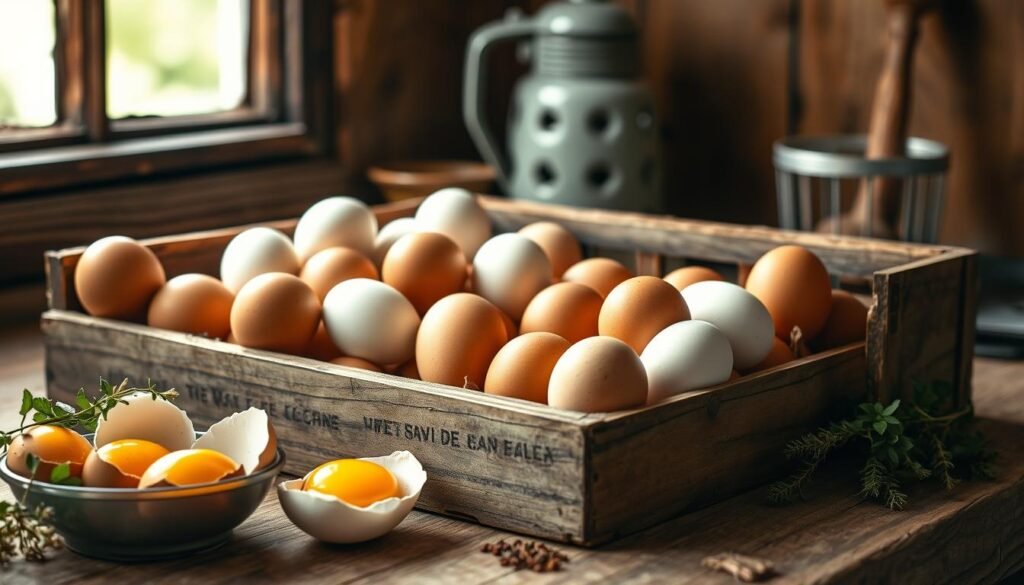
Freezing whole eggs and mixed portions
Crack and beat whole eggs (whites and yolks together) before freezing. Mixing prevents a rubbery texture that can happen when yolks freeze alone.
Portioning, dating, and recipe math
Portion in measured cups or trays, label with the date, and use within about six months for best quality. Remember: 1 egg ≈ 3 tablespoons, so recipes swap easily.
Separating whites and yolks for baking
For meringues or delicate bakes, freeze whites separately. If you add salt to improve yolk texture, add it to yolks only, not whites.
Water glassing for very long storage
Water glassing uses a lime-water solution to preserve clean, uncracked shells. Done correctly, this method keeps eggs usable for roughly 12–18 months.
| Method | Best use | Storage time |
|---|---|---|
| Frozen mixed eggs | General cooking, baking | Up to ~6 months |
| Frozen whites or yolks | Meringue, custard, pastry | Up to ~6 months |
| Water glassing (lime-water) | Whole-egg storage in shell | 12–18 months |
Storing farm fresh eggs with confidence, season after season</h2>
We close with a simple plan so we can keep fresh eggs on hand whether our chickens are laying every day or less often. Follow a consistent routine and label cartons by collection date to rotate stock easily.
Preserve the bloom when possible: unwashed shells hold up better at room temperature for short time if kept cool and shaded. When shells are washed, refrigerate right away to limit spoilage.
Use the refrigerator for longer storage and avoid temperature swings. Store pointy-side down in covered cartons to protect shells and cut odor pickup.
For surplus, freeze beaten whole portions or try water glassing for 12–18 months. Finally, test questionable eggs with the float, smell, and visual checks before use. No single timeline fits every kitchen, so we pair storage rules with common-sense testing.