How to Winterize Garden
We’ll share a clear, practical plan for putting our garden to bed each fall. This introduction defines the work: protect soil, plants, and systems so spring growth begins with fewer setbacks.
Regional differences matter. Our checklists vary across the United States because frost dates, freeze depth, and seasonal swings change when we act.
In this guide we preview the full process: timing, beds and soil care, mulch and leaf management, vegetable plots and containers, perennials, berries and roses, trees and shrubs, and gear and irrigation care.
Winter prep is more than cleanup. We’ll focus on nutrient and moisture management and on steps that stop pests and diseases from overwintering.
Our approach is read-and-do: each section has immediate tasks for this week and items to schedule near first frost or when the ground freezes. That way we cut spring chores and protect long-term plant health.
Know Your Timing: From First Frost to When the Ground Freezes
Knowing when frost will arrive helps us spread autumn chores across weeks, not days. We use our local first frost date as the anchor for planning. That gives a practical 2–6 week runway for critical tasks before the cold sets in.
Use the local first frost date
We mark the average first frost on our calendar and work backward. Hardy vegetables survive hard frosts near 25°–28°F. Semi-hardy crops tolerate light frost around 29°–32°F.
Watch soil and air temperatures
Soil temperatures lag the air and hold more heat near roots. Freeze-thaw swings in the ground can stress roots more than steady cold. Mulch helps moderate those cycles and protect root zones during winter.
Cutbacks, wildlife, and the frozen ground
We defer cutting perennials until foliage dies and the ground freezes hard. Leaving seedheads gives birds winter food and structure.
- Harvest tender crops before a hard frost.
- Plant garlic and dig root crops after the ground freezes is planned.
- Delay heavy pruning until dormancy to reduce disease carryover.
| Task | Timing | Reason |
|---|---|---|
| Batch chores by month | 2–6 weeks before first frost | Avoid last-minute work |
| Final mulch | After soil cools | Reduce freeze-thaw stress |
| Perennial cutback | After ground freezes | Lower pathogen carryover |
How to Winterize Garden Beds and Soil for a Stronger Spring
We reset beds in late autumn so spring planting starts with healthier soil and fewer chores.
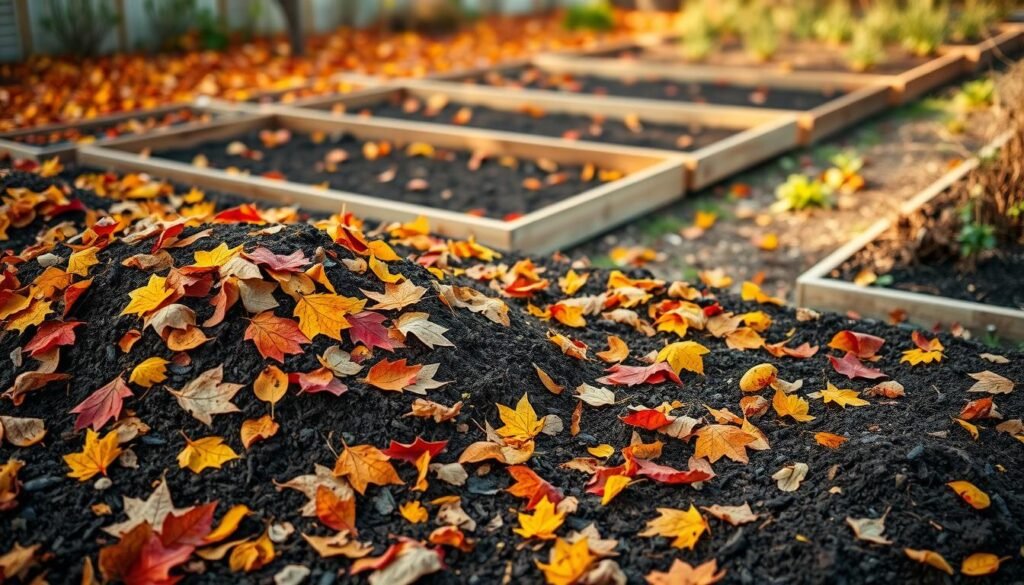
Pull debris and remove diseased material
We clear spent crops, stakes, and old trellising so pests and insects lose winter cover. Dead vines and foliage can shelter eggs and pests, so removal matters.
Diseased material should never go into the compost pile. We bag it or follow local disposal guidance to lower reinfection risk.
Weed now to cut next spring’s work
Fall weeding prevents seeds and insect eggs from overwintering. Tackling roots and runners in autumn shrinks the spring weed load.
Top-dress, mulch, and use shredded leaves
We add a couple inches of compost or well-aged manure in late autumn so winter moisture and freeze-thaw cycles help the soil absorb nutrients.
Next, we cover beds with a light straw or mulch layer to reduce erosion and nutrient leaching. Shredded leaves act as a low-cost mulch and future organic matter.
Raised beds vs in-ground beds
Raised beds warm and dry faster; use a thinner mulch layer there. In-ground beds can hold a deeper layer to protect roots and improve soil structure by spring.
- Spring payoff: fewer weeds, easier planting, and richer soil structure.
Mulch, Leaves, and Compost: Building a Protective Winter Layer
We built a winter blanket that insulates soil, holds moisture steady, and prevents sharp freeze-thaw swings around roots. A 2–4 inch organic layer worked well in most beds: 2 inches on raised or warm sites, 3–4 inches on exposed or sandy soil.
Choosing materials and thickness
Straw and pine needles give light cover and good air flow. Compost and leaf mold add nutrients and break down faster. Leaf mulch is usable right away for beds that need an immediate cover.
Shredding and airflow
We shredded leaves with a mulching mower or by running a string trimmer over bagged leaves. Shredding prevents matting, improves air circulation, and speeds decomposition.
Where not to leave leaves and common mistakes
Rake leaves away from roses and fruit trees; those leaves can hide fungal pathogens. Avoid piling mulch against stems or crowns and don’t cover plants while soil is still warm.
| Material | Best use | Breakdown speed | Ideal inches |
|---|---|---|---|
| Straw | Vegetable rows, exposed beds | Slow | 2–4 |
| Pine needles | Acid-loving beds, good air flow | Moderate | 2–3 |
| Compost / leaf mold | Top-dress, nutrient boost | Fast | 1–2 |
| Shredded leaves (leaf mulch) | General cover, storage for spring | Moderate | 2–4 |
- Store extra leaf mulch in breathable bags or a covered bin; keep dry and use in spring.
- Remove diseased leaves from the yard—do not compost them.
- Check mulch depth in late winter and thin if needed to improve air flow.
Vegetable Garden Winter Care: Harvest, Protect, and Store Smart
Late-season care in the vegetable plot keeps our harvest usable through cold months and eases spring chores. We start with a harvest-first approach and then sort what stays, what needs shelter, and what we store for months.
Harvest and clear
Pick tender crops like tomatoes, zucchini, peas, beans, winter squash, and pumpkins before hard frost. Remove vines and debris right after harvest to cut pest and disease carryover.
Classify and protect
We separate crops by hardiness: tender (lose at warm frost), semi-hardy (29°–32°F) and hardy (25°–28°F). Examples: cabbage and leeks benefit from a row cover or cold frame; kale, Brussels sprouts, and spinach can stay with light protection or mulch.
Root crops and storage
Dig carrots, beets, and turnips before the ground hardens. Potatoes need curing about two weeks in a warm, dry spot out of sun and should not be washed before storage.
- Protect garlic planted for overwinter planting with a 2–4 inch mulch layer.
- Decide what we store, leave in-ground under cover, or preserve by freezing and drying.
| Task | Timing | Benefit |
|---|---|---|
| Harvest tenders | Before first hard frost | Save flavor |
| Row cover/cold frame | When temps hit 29°–32°F | Extend harvest |
| Root dig and cure | Before ground freezes | Longer storage |
Herbs and Containers: What Comes Inside and What Stays Out
As nights cool we sort herbs and potted plants so the hardiest stay outside while tender ones move close to the house.
Identify hardy perennials and tender herbs
We mark sage, thyme, chives, and oregano as hardy perennials that often survive a light freeze. Parsley tolerates light frost but may need mulch.
Rosemary and basil are tender and belong in sheltered spots or indoors in colder zones. Use the two-zones-harder rule for container selection: choose plants rated two zones colder than your climate when grown in pots.
Overwintering potted plants
Group pots near a south-facing wall and shelter them from wind. Move the most sensitive pots into a garage or basement that gets some light.
Roots in containers freeze faster than those in the ground. Insulate pots with bubble wrap, burlap, or move them onto insulating boards for added protection.
Water and indoor checklist
Keep soil lightly moist into winter; do not leave pots waterlogged. Proper moisture helps roots survive cold snaps.
- Indoor light: bright, indirect light for several hours.
- Temperature: cool and steady, not drafty.
- Pests: inspect and treat before bringing plants into the home.
| Item | Best action | Why it matters |
|---|---|---|
| Hardy perennials | Leave outside, mulch if needed | Survive winter with minimal care |
| Tender herbs | Group, shelter, or move indoors | Protect roots and foliage from freeze |
| Containers | Insulate or move to sheltered spot | Reduce root freeze risk |
| Watering | Keep slightly moist before deep freeze | Prevents desiccation and winter loss |
These quick steps cut losses and make it easier next spring. If you plan to winterize garden areas this fall, these habits save time and preserve our plants year after year.
Perennials, Berry Patches, and Roses: Targeted Winter Protection
Fall watering makes a big difference for perennials and flowering shrubs. We give roots a final carry of moisture so plants enter winter hydrated. This cutback in dieback shows up as better spring growth.
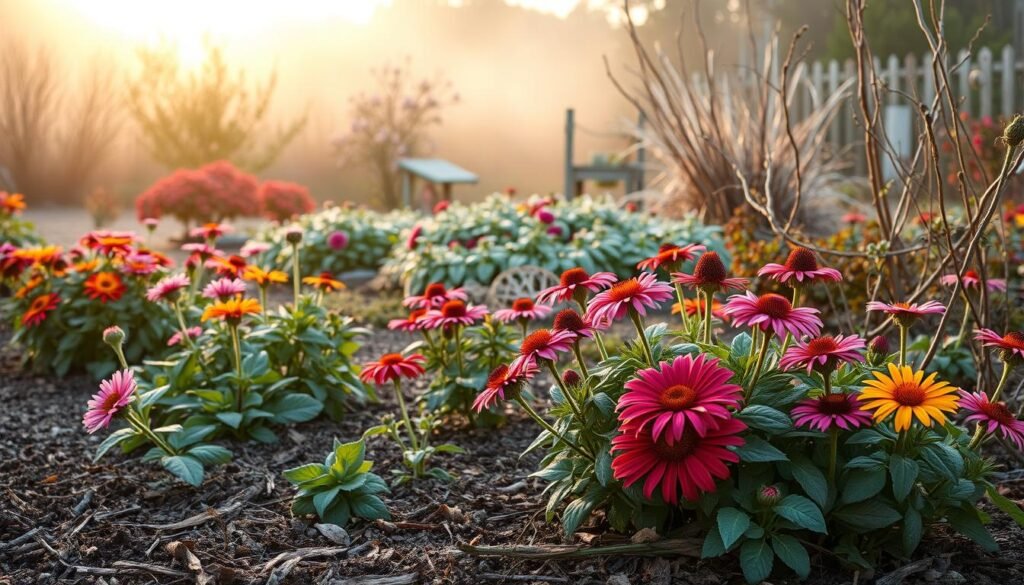
We leave seedheads for birds on some perennials. But disease-prone types—bee balm, phlox, hostas—should be cut after a hard freeze. Cut stems to about three inches and add a light layer of mulch around base without burying crowns.
Berry patches need crop-specific care. For summer-bearing raspberries we keep roughly six vigorous canes per foot. For fall-bearing types we cut canes to ground after fruiting. Mulch strawberries with straw, give blueberries a thin mulch around base, and secure blackberries to avoid frost heaving.
Roses need a short checklist. Stop feeding about six weeks before expected cold. Prune out diseased canes, then mulch above the graft union after first frost. In severe climates we add collars or mesh cylinders filled with chopped leaves, pine needles, or compost to protect crowns.
| Crop | Fall action | Mulch around base |
|---|---|---|
| Perennials (disease-prone) | Cut to ~3″ after hard freeze | 2–3″ light mulch, keep crown clear |
| Raspberries (summer) | Thin, keep ~6 canes/ft | 2″ straw or leaf mulch |
| Raspberries (fall) | Cut to ground after fruiting | 2–3″ mulch for insulation |
| Blueberries & strawberries | Light mulch; protect crowns | 1–2″ for blueberries; 2–3″ straw for strawberries |
| Roses | Remove diseased canes; mulch after frost; add collar if needed | Mulch above graft union, 3–4″ in severe zones |
In spring we remove winter mulch in stages. Pull back layers where new shoots emerge and assess winter injury before heavy pruning. These steps speed recovery and reduce early-season problems for our plants.
Trees and Shrubs: Prevent Winter Burn, Snow Damage, and Critter Injury
Our fall steps aim to stop winter burn, sunscald, and critter damage before snow arrives. We avoid major pruning late in the season because fresh wounds do not seal and can invite disease or spur tender new growth that cold will kill.
Young trunks need protection. We wrap them with tree guards or a breathable wrap to deter voles and reduce sunscald and bark splitting caused by warm days and freezing nights. Remove wraps in spring once temperatures stabilize to prevent moisture build-up.
For small shrubs and newly planted trees we set up simple barriers. Burlap on stakes, wire cylinders filled with straw or shredded leaves, and low staking help block wind, heavy snow, and animal nibbling without harming the plant.
Evergreens must be watered deeply before the ground freezes. A final, slow soak gives roots accessible moisture so needles do not desiccate when soil is frozen and uptake is limited.
| Issue | Action | When |
|---|---|---|
| Late pruning | Delay until dormancy in spring | After hard freeze / dormancy |
| Trunk damage (voles, sunscald) | Install trunk wraps or guards; remove in spring | Before first freeze |
| Snow/heavy load | Use burlap screens, stake branches, wire cylinders | Before storm season |
| Evergreen winter drying | Deep-water thoroughly; mulch root zone | Just before ground freezes |
Prioritize young, newly planted, and south- or southwest-facing trees and shrubs. For storms we secure supports and skim heavy snow off branches. We leave major corrective pruning for spring when we can better judge winter injury.
Watering Systems and Tools: Shut Down, Drain, and Store Before Freezing Temps
Shutting down water lines and caring for our tools now saves hours and costly repairs when spring arrives. A short, methodical routine prevents frozen pipes, cracked pots, and rusty metal.
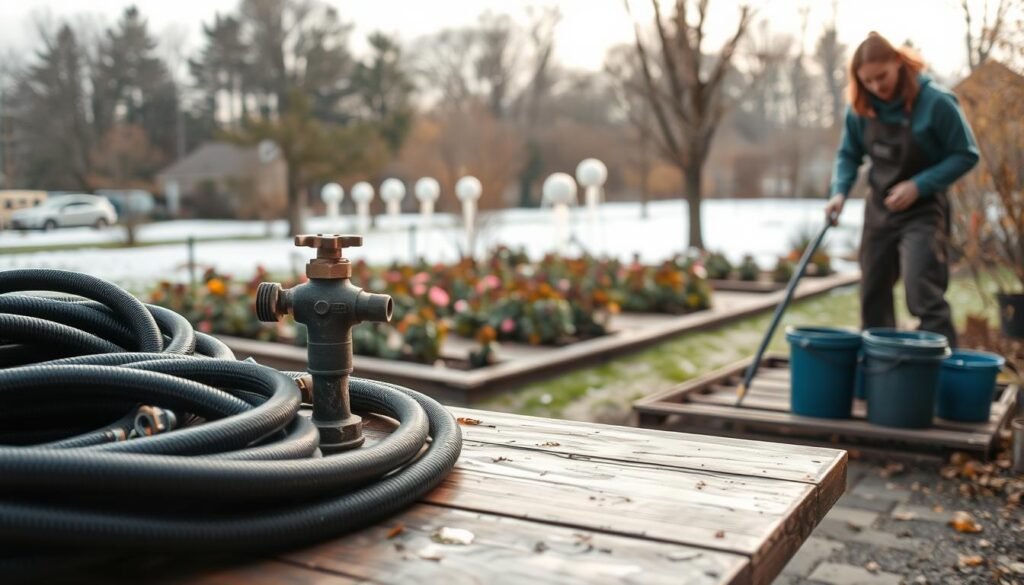
Irrigation and hose shutdown
Disconnect hoses, open spigots, and drain timers and drip lines. In milder areas this is enough; in cold zones we blow out lines with compressed air per manufacturer guidance.
Containers and tool care
Empty outdoor pots, clean them, and store upside down. Scrub dirt from tools, dry fully, then oil metal surfaces and hang or rack them in a dry spot.
- Drain and store hoses.
- Flush or blow out irrigation lines where needed.
- Clean, oil, and organize tools for easy spring access.
| Item | When | Why |
|---|---|---|
| Hoses & valves | Before freeze | Prevent cracking and leaks |
| Containers | After last use | Avoid frost damage |
| Tools & power gear | End of season | Stop rust and ensure readiness |
| Compost pile | Late fall | Cover lightly to retain heat and keep rain from turning it soggy |
These steps save us time come spring and keep our garden equipment working year after year.
Set Your Garden Up to Thrive Come Spring
We close with a short, repeatable checklist that turns autumn work into spring gains and makes winterizing garden feel routine. A compact review saves time and sets clear tasks for the first spring weekend.
Keep records of what we mulched, what crops stored well, and where protection cut losses. Clean beds now means fewer pests later. Mulch holds moisture and compost top-dressing feeds plants as growth resumes.
Prioritize before frost: harvest, clear debris, and finish irrigation shutdowns. Before the ground freezes: mulch, mulch collars, and shelter tender pots. Late winter tasks can wait until soil thaws.
In early spring we check mulch depth, remove covers in stages, and inspect plants before major pruning or feeding. Note lessons for next year, then spend the first spring weekend weeding, loosening mulch around shoots, and planting with confidence.